


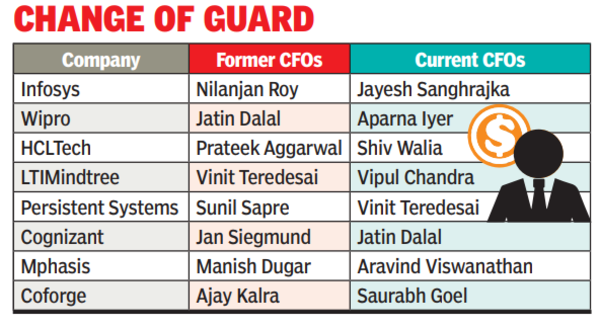
The Indian IT sector has been abuzz with a series of high-profile Chief Financial Officer (CFO) transitions in less than a year. This trend underscores the evolving landscape of top executive roles in the technology industry in India.
One notable transition took place at Cognizant, where Jatin Dalal, the former CFO of Wipro, succeeded Jan Siegmund, who retired earlier this year. Dalal’s move to Cognizant sparked a legal battle with Wipro, which sought Rs 25 crore for breach of contract. However, after a settlement, Cognizant paid Rs 4 crore to Dalal to resolve the issue.
At Wipro, Aparna Iyer took over as the new CFO, following Dalal’s departure. Iyer brings a wealth of experience from various leadership roles within Wipro and is poised to steer the company’s financial strategies.
In another key appointment, Mindtree appointed Vipul Chandra as its CFO, with prior experience in treasury management at Larsen & Toubro. Meanwhile, Vinit Teredesai, Mindtree’s former CFO, has joined Persistent Systems in a similar capacity.
Industry experts, such as Vikram Shroff from law firm AZB, highlighted the continued use of non-compete clauses by employers in the tech sector to safeguard sensitive information and business interests. This practice reflects the competitive nature of talent management in the industry.
Mohandas Pai, former CFO of Infosys, emphasized the importance of internal talent development for key finance positions. He noted that while hiring external CFOs is not uncommon, promoting from within signifies a robust succession plan within organizations.
Other notable transitions include Shiv Walia’s elevation as CFO at HCLTech, replacing Prateek Aggarwal, who pursued opportunities outside the company. Mphasis also welcomed Aravind Viswanathan from Tanla Platforms after the resignation of Manish Dugar as CFO.
Shriram Subramanian, founder of InGovern Research Services, highlighted the growing significance of CFO roles in tech companies, especially as these firms have doubled in size over the past five years. Despite their importance, only appointments of executive directors are subject to shareholder approval.


