


Hezbollah Leader Announces Assessment of Recent Attacks on Israel
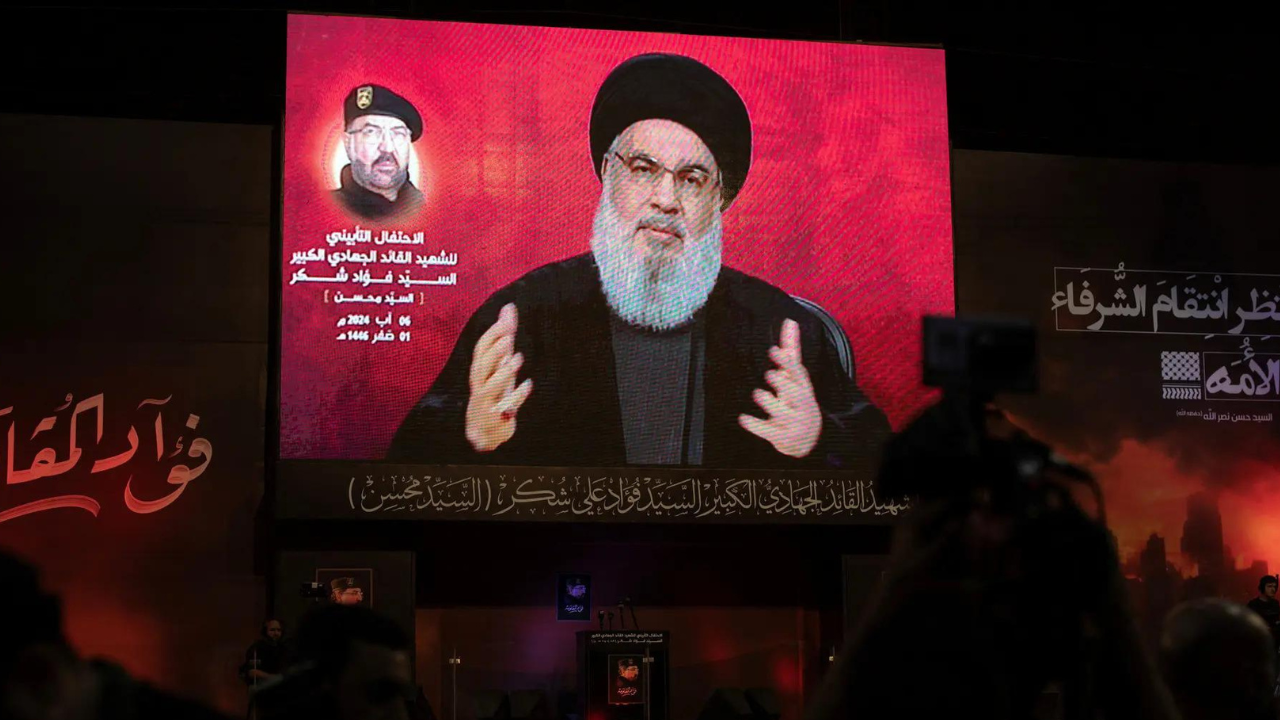
Hezbollah’s leader Sayyed Hassan Nasrallah announced on Sunday that his group would evaluate the impact of its recent rocket and drone assaults on Israeli military targets before making decisions on further retaliatory actions.
This development follows a fierce exchange of fire between Hezbollah and Israel, marking one of the most intense confrontations since the beginning of hostilities that have coincided with the Gaza conflict.
Nasrallah disputed Israeli military assertions that their preemptive strikes had prevented a larger Hezbollah attack. According to Nasrallah, Hezbollah carried out their operation “as planned,” intentionally avoiding civilian casualties or damage to critical infrastructure, such as Ben Gurion Airport in Tel Aviv. The main target was a military intelligence base located about 110 kilometers inside Israeli territory, marking the deepest incursion yet, with the base situated just 1.5 kilometers north of Tel Aviv.
The Hezbollah leader explained that the attack, in response to the killing of top commander Fuad Shukr last month, involved the launch of over 300 Katyusha rockets to overwhelm Israel’s Iron Dome defenses. In addition, attack drones, including those from the eastern Bekaa Valley, were utilized for the first time by the group. Nasrallah affirmed that none of Hezbollah’s launch platforms were affected by Israeli preemptive actions.
Nasrallah also addressed Israeli claims that Hezbollah had planned to fire thousands of projectiles, clarifying that a larger attack was not on the agenda. Delays in the operation were attributed to the mobilization of Israeli and American military forces in the region.
‘Not the end of the story’: Netanyahu
In response to the escalation, Israeli Prime Minister Benjamin Netanyahu cautioned Hezbollah and Iran of further repercussions, asserting that recent airstrikes on Lebanon had significantly diminished Hezbollah’s short-range rocket capabilities. Netanyahu asserted that the Israel Defense Forces (IDF) had successfully intercepted all drones aimed at strategic locations near Tel Aviv, including the Mossad headquarters.
The early Sunday clash saw Hezbollah launching a substantial barrage of rockets and drones, prompting a robust Israeli military response involving approximately 100 jets. This conflict resulted in one of the most significant clashes in over ten months of border strife, with missiles creating dramatic scenes in the sky and causing significant disruptions in both Lebanon and Israel.
Later in the day, sirens were reported in Rishon Letsiyon, central Israel, where the IDF identified a projectile from the Gaza Strip falling in an open area. The armed wing of Hamas claimed responsibility for this incident.
https://timesofindia.indiatimes.com/world/middle-east/israel-hamas-war-what-hezbollah-leader-nasrallah-said-on-possibility-of-future-attacks-and-other-takeaways-from-address-middle-east-tensions/articleshow/112788124.cms


