


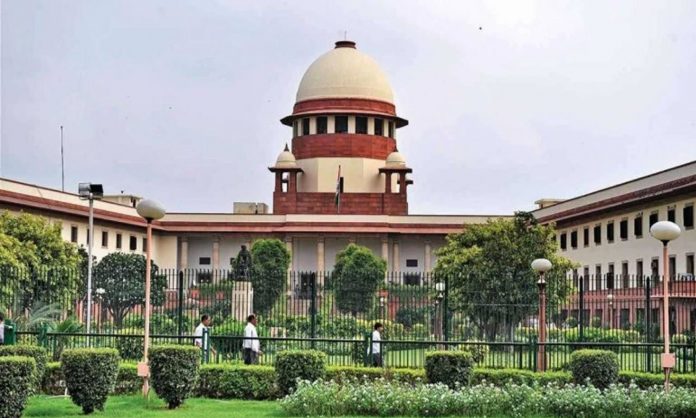
This article is written by Tarun Dogne and further edited by Priyanka Jain. The article is an exhaustive analysis of the case of Ashoka Kumar Thakur vs. Union of India (2008). The facts of the case, its background, the arguments advanced by both parties, as well as the judgement and the rationale behind the same, have been discussed, while referring to the relevant legal provisions and precedents. This case dealt with the issue of reservation in educational institutions, with respect to the Constitution (Ninety-third) Amendment Act, 2005 and the Central Education Institutions (Reservation in Admissions) Act, 2006.
In India, there are many underprivileged people, particularly classes or groups of people who, in the past, were given the tag of an inferior caste or a low status. These groups do not hold equal status in society. Since independence, every government has committed to eradicating this social inequality from our society. India has a long history of being a caste-based society and with time, it seems to have become more rigid in nature. The founding father of our Constitution, B.R. Ambedkar wished for a casteless and classless society in India. Article 15 (prohibition of discrimination on grounds of religion, race, caste, sex or place of birth) and Article 46 of the Constitution (promotion of educational and economic interests of Scheduled Castes, Scheduled Tribes and other weaker sections) are the main reflections of this particular idea.

Reservation is one of the tools for the purpose of upliftment of the weaker section of society. Initially in India, the benefit of reservation was only limited to the Scheduled Caste (SCs) and Scheduled Tribes (STs) but after the recommendations by the Mandal Commission Report, Other Backward Classes (OBCs) were also included in the scope of reservation. There are differing opinions on reservations in educational institutions and public employment. There have been many protests and various petitions in the Supreme Court as well as in High Courts, both against and in favour of the same. There are various arguments from both sides. Some say reservation may create reverse discrimination, while some argue that it is unfair to isolate certain sections of society from education or any other basic facilities and opportunities.

The case of Ashoka Kumar Thakur vs. Union of India (2008) primarily looked into the issue of whether reservations in educational institutions, for weaker sections of society, are constitutionally valid. This was discussed with respect to the Constitution (Ninety-Third) Amendment Act, 2005 and the Central Educational Institutions (Reservation in Admission) Act, 2006
To learn more about the 93rd Amendment Act, click here.


