


India’s IT Sector on the Cusp of AI Revolution: Nasscom-Deloitte Report
The technology landscape in India is poised for a significant transformation with the advent of the AI revolution. According to a joint report by Nasscom and Deloitte, India’s AI talent pool is expected to grow exponentially in the coming years, reaching over 1.25 million by 2027 from the current 6-6.5 lakh. However, despite this growth, there is a looming shortage of skilled manpower that could hinder the country from fully capitalizing on the opportunities presented by AI.
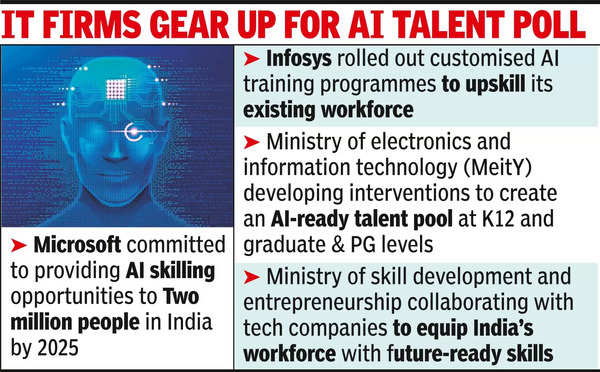
The report titled ‘Advancing India’s AI skills: Interventions and programmes needed’ highlights the potential of the global AI market, which is projected to reach $500 billion by 2027. India’s AI services market could contribute significantly to this growth, with an estimated potential of $25 billion. With the AI market demand growing at a CAGR of 25%-35%, there is a pressing need to bridge the gap in skilled manpower.
Sathish Gopalaiah, President of Tech and Transformation at Deloitte South Asia, emphasized the urgency of upskilling efforts to meet the rising demand for AI talent. According to him, the current growth rate of AI skills at 13% is insufficient to match the market demand, underscoring the need for concerted efforts in skilling initiatives.
Sangeeta Gupta, Senior VP & Chief Strategy Officer at Nasscom, views the AI revolution as a pivotal moment akin to past technological milestones like Y2K and the digital wave. She stressed the importance of quickly filling the demand-supply gap through robust skilling initiatives and collaboration between industry and academia.
India’s IT sector, a significant contributor to the country’s economy, is poised to capitalize on the growing demand for AI exports. With the sector’s exports expected to reach $100 billion by 2030, driven by deep tech innovations like AI, GenAI, Blockchain, and AR/VR, the report outlines a roadmap for advancing India’s AI exports.
To achieve this goal, the report suggests investing in upskilling initiatives, fostering collaboration between industry and academia, and establishing data and AI labs. These measures, coupled with an enabling environment for innovation and growth, can propel India’s digital economy towards greater success in the AI era.


