


The Foldable Phone Dilemma: Are They Worth the Price?
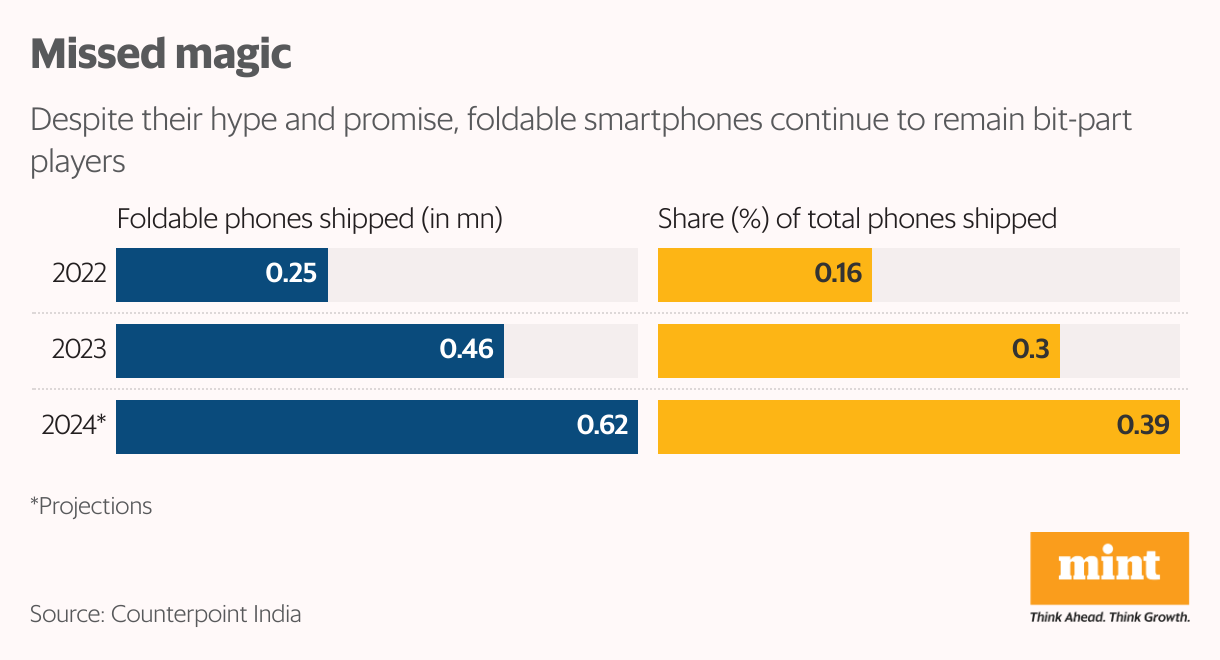
Motorola recently introduced the Moto Razr, a foldable phone, in India. Following suit, Samsung is preparing to launch its own foldables. Despite being in the mainstream market for a few years now, foldable phones have failed to gain traction among consumers. So, why are people hesitant to invest in these innovative devices?
Exploring the World of Foldable Phones
Several foldable smartphones are now available in the Indian market, offering consumers various options to choose from. With lineups like Samsung’s Galaxy Z Fold and Flip, Motorola’s Razr, OnePlus Open, Oppo’s N Flip series, and Vivo’s X Fold3 Pro, buyers have a range of foldable phones to consider. While the selection is not as extensive as traditional smartphones, there are still choices available for those interested in exploring the foldable phone trend.
What Makes Foldable Phones Unique?
Foldable phones promise versatility by offering both compact and tablet-like designs. Brands claim that these devices can seamlessly switch between being pocket-sized and tablet-sized, providing users with a multifunctional experience. While the flexibility of use cases is a highlight, the overall features and applications of foldable phones are not significantly different from traditional smartphones. The lack of exclusive apps is also a factor that sets them back.
The Price Tag of Foldable Phones
Foldable phones come at a cost. The cheapest option, Samsung’s Galaxy Z Flip 4, is priced at ₹64,999. Other models like Oppo, Moto Razr, OnePlus Open, Vivo’s foldable, and Samsung’s Galaxy Z Fold 5 range from ₹74,999 to ₹1.85 lakh. In comparison, the average smartphone sells at ₹22,000, making foldable phones a luxury investment.
The Hurdles to Foldable Phone Adoption
The lack of innovative use cases, app support, and high production costs are the main reasons why foldable phones have struggled to gain popularity. With many foldable devices requiring users to open the main display for tasks and the inability to replace standalone tablets, the practicality of these devices is questioned. Additionally, the engineering challenges and limited use cases for bendable and rollable displays hinder their widespread adoption.
Looking Beyond Foldable Phones
While the future of foldable technology holds promise, the current market struggles to embrace these devices due to their high costs and limited functionality. As companies continue to explore innovative display technologies, it remains to be seen if foldable phones will become a mainstream choice for consumers.


