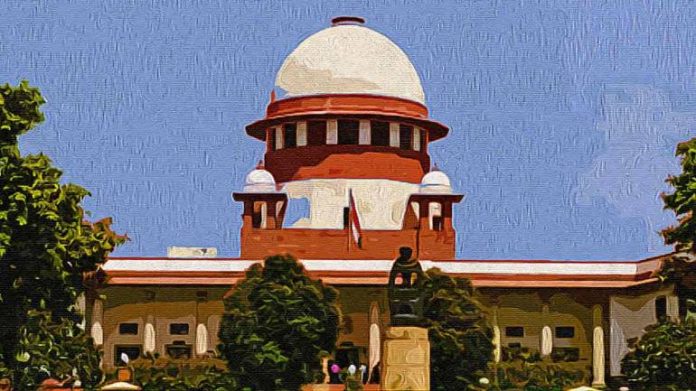
This insightful article is crafted by Shamim Shaikh. It delves into the fascinating case of Anil Kumar Jha vs. Union of India, shedding light on the Supreme Court’s intervention in Jharkhand’s political crisis. The case revolves around the appointment of Pro-tem Speakers by the Governor in the Legislative Assembly, addressing crucial questions of constitutional validity and fairness.
Introduction
Democracy thrives on the freedom of choice and the election of leaders by the people. However, when elected officials veer off course and disrupt the democratic foundation, the judiciary steps in as the guardian of justice. In the case of Anil Kumar Jha vs. Union Of India (2005), the Supreme Court addressed the Governor’s powers under the Indian Constitution, particularly Article 180 & Article 333. The petitioner, Anil Kumar Jha, challenged the appointment of a Pro-tem Speaker in Jharkhand, citing deviation from established norms. The case unfolded critical questions around gubernatorial discretion and minority representation, ultimately leading to a pivotal floor test ordered by the Supreme Court.

Brief details of the case
Name of the case – Anil Kumar Jha vs. Union of India
Case Number: Writ Petition (C) No. 120 of 2005 and Writ Petition (C) No. 123 of 2005
Date of Judgement: 7th March, 2005
Court: The Supreme Court of India
Bench: Hon’ble Chief Justice R.C. Lahoti, C.J., Hon’ble Justice Y.K. Sabharwal, Hon’ble Justice D.M. Dharmadhikari, J.J..
Type of the case: Civil Writ petition filed by the petitioner under Article 32 of the Indian Constitution before the Hon’ble Supreme Court
Parties of the case: Petitioner – Anil Kumar Jha; Respondent – Union of India
Petitioner represented by: Mr. Mukul Rohatgi and Ravi Shankar (Learned Senior Counsel) and Ms Pinky Anand (Assistant advocate)
Respondent represented by: Dr. A.M Singhvi (Learned Senior Counsel) and Mr.A.K Mathur (Advocate)
Equivalent citations: 2007(2) SLJ63 (CAT)
Referred laws and provisions: Articles 180, Article 333 and Article 32 of the Constitution of India
Facts of the case
The case unfolded in the Jharkhand Legislative Assembly, with Anil Kumar Jha challenging the Governor’s decision to appoint a junior member as Pro-tem Speaker. The petitioner raised concerns about the nomination of an Anglo-Indian member, questioning the transparency and fairness of the nomination process. The potential impact on ongoing legal proceedings and the balance of powers in the assembly fueled the controversy.
Issues raised in the case
- Whether the appointment of a junior member as Pro-tem Speaker violated constitutional norms?
- Was the nomination of the Anglo-Indian member influenced by a pending legal case?
Arguments of the parties
The petitioner contested that both the appointment of a junior Pro-tem Speaker and the nomination of an Anglo-Indian member were arbitrary and could potentially disrupt the democratic balance in the assembly. Concerns were raised about the integrity and fairness of the nomination process under the prevailing political circumstances.
Laws discussed in Anil Kumar Jha vs. Union of India (2005)
Article 180(1) of the Constitution of India
Article 180(1) of the Indian Constitution empowers the Governor to appoint a Pro-tem Speaker in case of vacancies, prioritizing continuity in legislative functions.
Article 333 of the Constitution of India
Article 333 of the Indian Constitution addresses the nomination of an Anglo-Indian member in the legislative assembly to ensure diverse representation.
Article 32 of the Constitution of India
Article 32 of the Indian Constitution empowers individuals to seek remedy directly from the Supreme Court for any violation of their fundamental rights.
Judgement in Anil Kumar Jha vs. Union of India (2005)
The Supreme Court’s directive in the Anil Kumar Jha case emphasized transparency and fairness, mandating video recordings of the assembly proceedings. This measure aimed to ensure accountability and prevent misuse of executive powers that affect minority representation. The court’s proactive role in promoting justice and adherence to constitutional principles was exemplified in this case.
Recent cases relating to similar issues of appointing Pro-tem Speaker
Recent instances involving appointments of Pro-tem Speakers have raised critical questions about political conventions versus constitutional authority. Judicial intervention has played a vital role in navigating disputes and upholding democratic principles. The delicate balance between convention and constitutional discretion remains a defining aspect of legislative frameworks.
Potential legal challenges arise in using the Governor’s discretionary powers to appoint Pro-tem speakers
The Supreme Court’s clarifications on the Governor’s discretionary powers underscore the importance of reason and good faith in the exercise of authority. Judicial review acts as a checks-and-balances mechanism, ensuring accountability and fairness in appointments, despite potential risks of judicial overreach.
Analysis of Anil Kumar Jha vs. Union of India (2005)
The Anil Kumar Jha case serves as a significant precedent for judicial intervention in upholding transparency and constitutional values. It highlights the judiciary’s critical role in safeguarding democracy and accountability in governance, setting crucial guidelines for future nominations and appointments.
Conclusion
Through the Anil Kumar Jha case, the Supreme Court demonstrated its commitment to justice, transparency, and constitutional adherence in the face of political turmoil. Upholding democratic principles and constitutional norms, the court’s intervention paved the way for fairness and accountability in legislative proceedings.
Frequently Asked Questions (FAQs)
What does Article 180 of the Indian Constitution talks about?
Article 180 of the Indian Constitution explains the process for managing duties in the absence or vacancy of certain positions.
Who can be a Pro-tem Speaker?
As per Article 180 of the Indian Constitution, the Pro-tem Speaker is nominated by the Governor/president to fulfill the duties of the Speaker or Deputy Speaker in their absence.
What is the role of Pro-tem Speakers?
Pro-tem Speakers act temporarily to oversee legislative proceedings and administer oaths to new members until a Speaker is elected.
What is democratic accountability?
Democratic accountability requires elected officials and institutions to justify their actions and decisions through transparency, adherence to the rule of law, and public participation.
What is a floor test and its purpose?
A floor test is conducted to determine if the ruling government maintains majority support in the legislative assembly, crucial for ensuring governance stability.
The concept of appointment of a Pro-tem speaker is adopted from which country?
The system of appointing a Pro-tem Speaker draws inspiration from the UK’s Westminster system’s “Father of the House” Convention, which entrusts the member with the longest parliamentary service to preside over the house.
What criteria are typically considered for the appointment of Pro-tem Speaker?
Article 94 of the Constitution guides the appointment process of Pro-tem Speakers, focusing on seniority and parliamentary experience.
References