


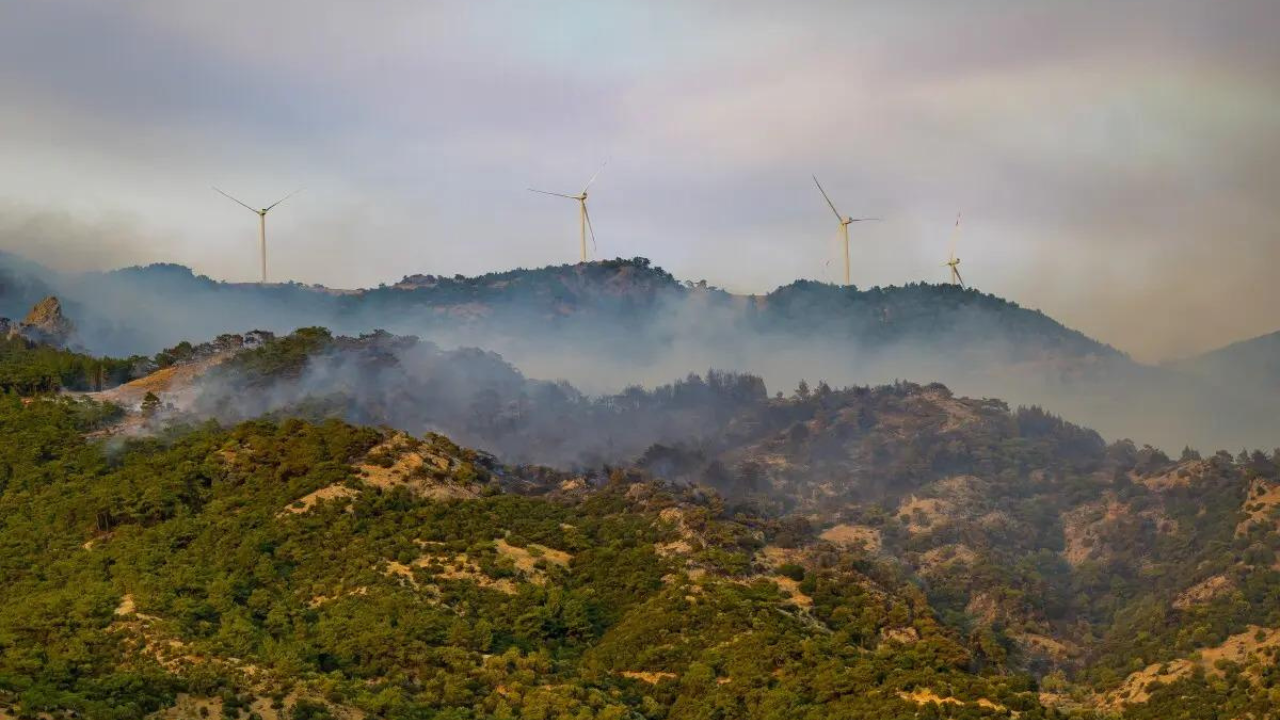
Fires have devastated the forests around Izmir, Turkey’s third most-populous city, for the past four days but there is finally some relief as authorities announced on Sunday that the flames have been brought under control. Agriculture and forestry minister Ibrahim Yumakli stated that while efforts are still ongoing to extinguish hotspots, the situation has significantly improved in one area.
“There is no longer any risk in the section overlooking the city. Firefighters have successfully contained the fire in a valley. I am grateful to report that the fire in the Yamanlar area of Izmir is now under control,” Yumakli shared with reporters.
Despite new fires erupting in the Izmir province on Saturday, prompt evacuation measures helped to swiftly bring them under control, including one threatening the seaside resort of Cesme. Yumakli added that while flames continue to affect steep valleys south of Izmir, they are spreading at a slower pace.
Unfortunately, the fires have left a trail of destruction with at least 43 buildings damaged in Izmir. Twenty-six individuals have been hospitalized due to fire-related injuries, but thankfully, no human casualties have been reported. Tragically, some wildlife, including cats and dogs, perished in the blaze.
The intensification of extreme weather events, such as heatwaves, due to climate change amplifies the risk of wildfires. The Izmir fire, which started on Thursday and quickly spread due to strong winds, prompted a massive response from firefighters, the army, and the police.
While the Izmir fire has been the largest this summer in Turkey, there are still ongoing fires in other forested areas across the country. This includes blazes in Bolu and Aydin, among others. In June, a fire in Mardin claimed the lives of 15 individuals, highlighting the devastating impact of these natural disasters.
The recent events serve as a stark reminder of the urgent need to address climate change and its repercussions. It is essential to prioritize environmental protection and sustainable practices to mitigate the risks posed by wildfires and other environmental catastrophes.


